“Balance” sounds really good, and it’s fair to say that it’s making a staggering comeback these days. Work-life balance, the balance of functionality and design in architecture, the balance of innovative technology, economy and ecology in new products. The examples could be multiplied endlessly.
We are all looking for a balance in what we do and how we live, which is not so easy, because in this balance we are after all striving for spiritual, creative, economic or social development. The urge to develop is inscribed in the genotype of humanity and, as we all know, you don’t pluck genes. 😊
Do you know where the currently fashionable concept of sustainability comes from? From the forest. Hans Carl von Carlowitz, author of the first German publication on forest management at the turn of the 17th century, stated that healthy forest management presupposes that only as many trees can be cut down as can grow in their place so that the forest can always rebuild itself and not cease to exist.
It might seem that it has been a long time since the idea of sustainability originated and the world has had time to integrate it well, but as industrial history shows, nothing could be further from the truth. Industrial revolutions have been generators of massive change and breakthroughs on a global scale, not only economically but also socially. The steam engine, the processing of heavy metals or the development of the textile industry have changed the world forever, but as you know, they have also contributed to the dire state of our planet today. Reckless consumerism fuelled by large corporations, the irresponsible management of raw materials or the generation of huge amounts of waste are real problems that we have to face today.
Fashionable fast food indigestible?
Faster, more, cheaper… it is no coincidence that the textile industry, which is the symbol of the industrial revolution, has created one of the most polluting industries in the world, namely fashion. Clothing fast food, which is the provision of a huge mass of cheap, fast-moving products of questionable quality has settled into our reality for good. Global brands are masterfully generating fashion trends that are quickly and cheaply available in chain stores. The ever-new ‘must have in your wardrobe’ collections are designed to drive and sell. And that what is quick and cheap quickly ends up in the dustbin is of little concern to anyone.
Did you know that creativity is that wonderful quality that helps you find non-obvious solutions? We often say that creativity is about skilfully connecting the dots and finding the bigger picture, the one that goes beyond our backyard. Everything you do today will have an impact on future generations, not only in your home town of Chodzież, but also in Seoul, Toledo or Madagascar. For this reason, conscious creators are looking for sustainable alternatives, experimenting with eco-friendly materials, recovering raw materials and reprocessing them.
Eco-design, or responsible design, is a trend that is entering virtually every industry and occupying an increasingly significant area of the market. Using biodegradable, recyclable materials or even creating in the spirit of upcycling is increasingly important to conscious consumers and can be a great differentiator for your business.
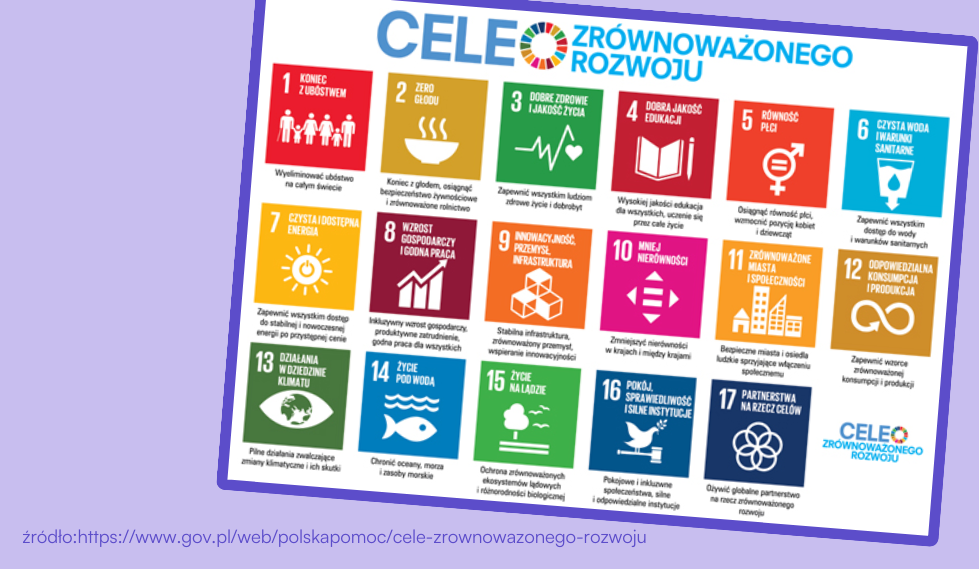
Wondering how to define them and incorporate them into your creative projects? We recommend you take a look at the Sustainable Development Goals, which have been developed by wise heads from the United Nations as a guideline for businesses, organisations or governments.
Take a look and choose from them the ones that resonate most with your values and aspirations. To start with, it is best to focus on a maximum of 2-3 aspects in order to clearly communicate the idea to your audience. Your idea is to artisanally produce natural cosmetics? Great, that means your goal is to provide your audience with health and a high quality of life.
And in the words of our friendly creator of bags sewn from car belts by Cangur: “Beauty and responsibility can go hand in hand, creating a style that contributes to a better tomorrow”.